Strategy
Continuously defines the priority of user and business problems to solve, pairing a Vision-Led Strategy and Product-Led Growth with the DVF Framework to establish strategic guardrails.

As a hands-on product leader with over 25 years of award-winning experience, he views design as encompassing the entire product, placing users at the heart of growth while integrating business objectives, engineering feasibility, marketing brand promises, sales expectations, and support communication. He believes that great design thrives on collaboration and iteration, transforming strategic vision and market opportunities into compelling, end-to-end user experiences.
On a practical level, he researches users, sparks discussions, forms hypotheses, challenges assumptions, brings clarity through definition, designs interfaces, ensures quality, and embraces change. He strikes a balance between the three cornerstones of interactive solutions: leading with the user in mind, managing from the business perspective, and supporting the technology side. Driven by a natural empathy for users, he focuses deeply on the art and science of designing interfaces that are easy to use.

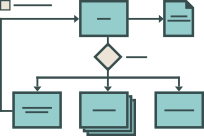
Grounded in a foundation of industry best practices and extensive experience, Jared's Adaptive Product Model is a conceptual approach for creating interactive solutions that deliver value to users while achieving desired business outcomes, rather than merely producing output. At its core is Tri-Track Agile, which introduces a continuous strategy loop alongside parallel discovery and delivery tracks:
Continuously defines the priority of user and business problems to solve, pairing a Vision-Led Strategy and Product-Led Growth with the DVF Framework to establish strategic guardrails.

Continuously validates what to build using Whole Product Design and Double Diamond Design, challenging solution ideas directly with users before dedicating engineering resources.

Continuously develops and deploys builds through decoupled releases, combining agile execution with an Architecture-First mindset to ensure technical sustainability and system scalability.
Tightly integrating these three tracks transcends the mechanical production of output into a unified system that consistently generates sustained, meaningful outcomes.
Modern strategy bridges the gap between business objectives and user behavior. Continually aligning market intelligence with usage data creates a shift from speculative planning to evidence-based agility, which Jared focuses on through:
Evaluates market dynamics with user demands to prioritize critical user and business problems. Analyzing strategic fit, establishing financial models, and evaluating competitive differentiation mitigates risk before committing resources to initiatives.
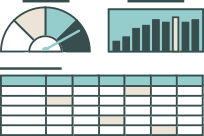
Has transitioned from static retrospective reporting to leveraging real-time interpretation of quantitative usage data and live business telemetry. Combining user behavior metrics with product performance generates the essential feedback loop to adaptively steer strategic cycles.
Jared also transforms raw user insights and data into a cohesive experience across the entire user lifecycle relying on various degrees of these design disciplines to work in tandem throughout discovery:
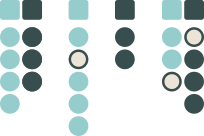
Has moved away from heavy, front-loaded efforts toward AI-assisted continuous discovery loops for synthesizing analytics with feedback and analyzing dynamic personas. Observing the market, forming hypotheses, and rapidly testing the riskiest assumptions.
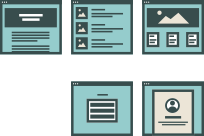
Handles organizing functionality and content via information architecture, not just for human navigation, but ensuring it's optimized for LLMs, Retrieval-Augmented Generation (RAG), and semantic search engines. Establishing a shared glossary helps provide consistent terminology across the user's entire product experience.
Rapidly develops prototypes to validate core functionality and content. Prototyping has transitioned from high-maintenance clickthrough screens to high-fidelity interactive prototypes that mirror real production components and logic, allowing for true usability validation and streamlined development flow.
Produces modern design systems that help products scale through strict W3C-compliant design token architecture and unified design engineering pipelines that automatically sync to production codebases. Forming style guides, design patterns, and a library of reusable assets ensures cohesion across the entire product experience as well.